
Your Recruiter Took PTO. The Search Took It Personally.
A recruiter steps away for a few days and suddenly a search that seemed perfectly organized starts developing amnesia.
The hiring manager remembers liking a candidate, but cannot find the feedback. Someone knows there was a compensation concern, but the resolution happened in a private message. Another candidate is waiting for an update because nobody is quite sure who owns the response. The next interview stalls because one person knows what still needs to be validated, and that person is currently sitting on a beach trying not to check Teams.
Nothing is technically missing.
It just lives with the person who is gone.
Then the recruiter comes back, reconnects the pieces, updates the candidates, translates the feedback, reminds everyone what was agreed to, and gets the search moving again.
Everyone is relieved.
The recruiter looks exceptional.
They probably are.
But that does not mean the hiring process is.
The original campaign gets to the real problem: the search did not suddenly become disorganized when the recruiter stepped away. The person compensating for the disorganization simply stopped compensating for it.
Great Recruiters Can Make Weak Processes Look Surprisingly Healthy
Strong recruiters carry an incredible amount of invisible context.
They remember that the hiring manager quietly changed the requirement three weeks ago. They know that “not quite right” actually means the candidate lacked executive presence. They know which interviewer has not submitted feedback, which candidate is getting impatient, and which concern the team still has not resolved.
That skill has value. Nobody is arguing otherwise.
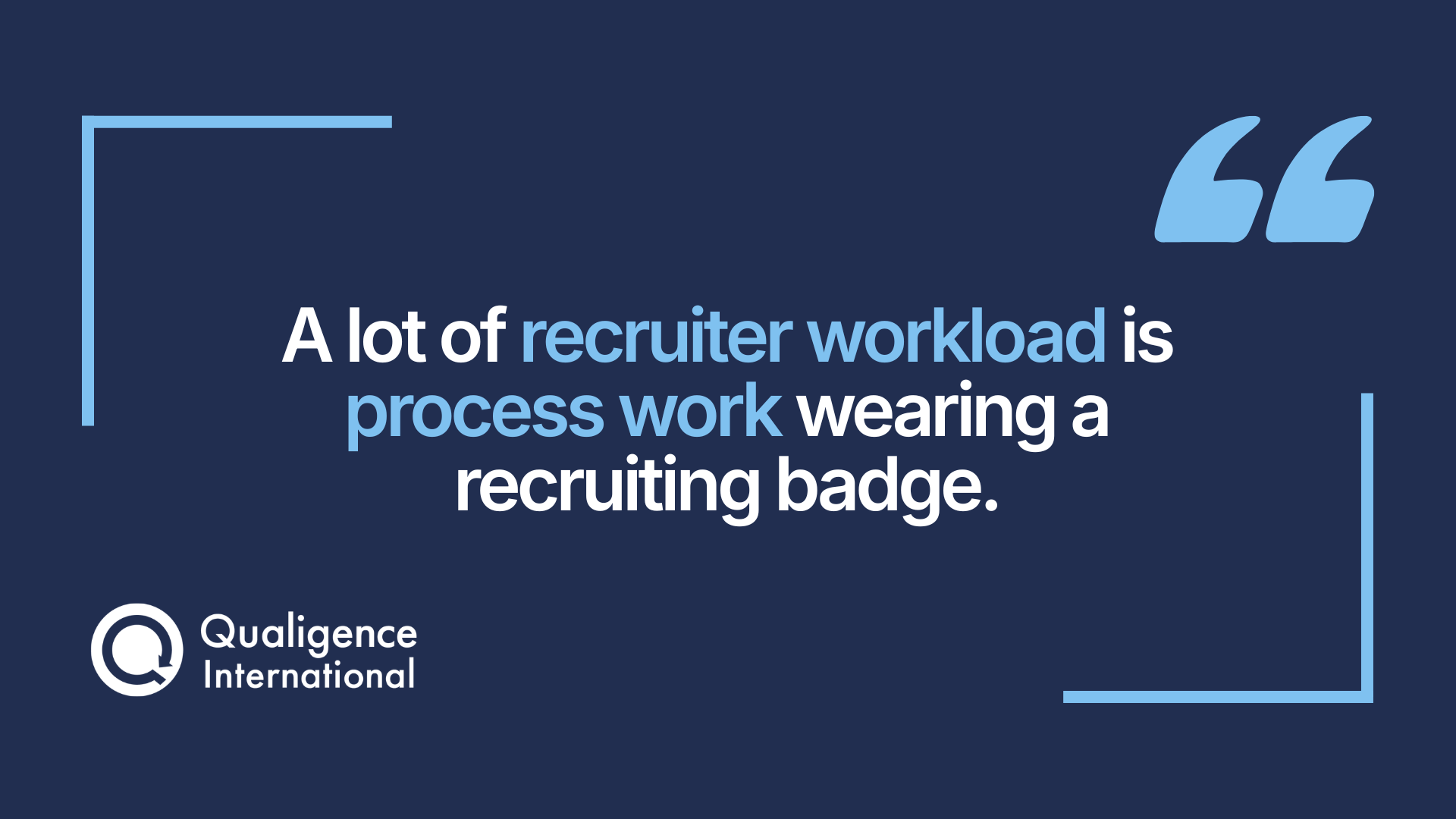
The problem is what happens when the organization starts confusing a talented recruiter’s ability to compensate for the process with evidence that the process itself works.
A strong recruiter should make hiring better.
They should not be the memory, translator, project manager, candidate communication system, hiring-manager conscience, and decision engine all at once.
At some point, that stops being recruiting excellence and starts becoming infrastructure held together by one person.
More Recruiting Activity Will Not Fix a Process That Needs Rescuing
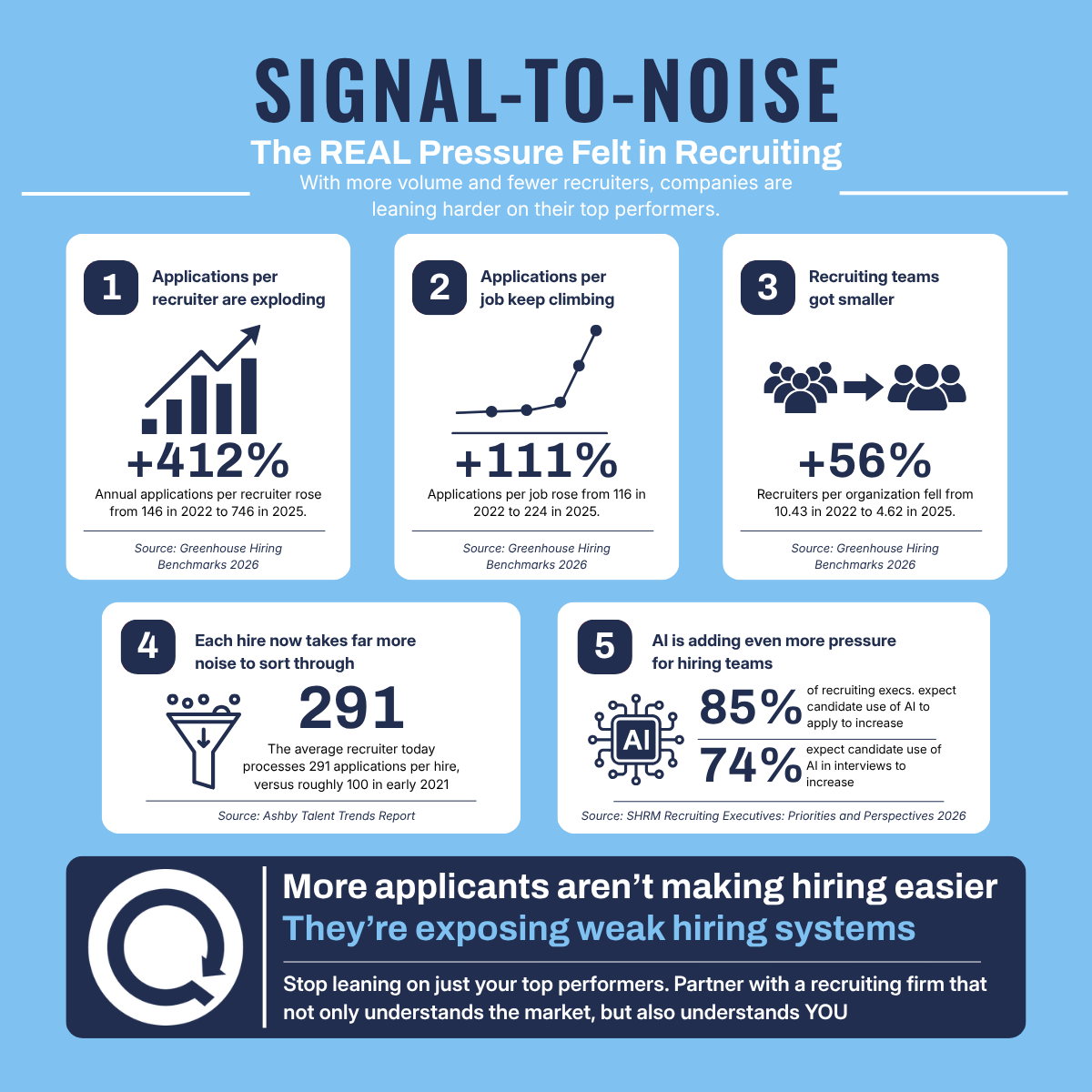
When hiring slows down, companies tend to reach for the obvious answers.
More candidates.
More outreach.
Another recruiter.
Another status meeting.
Another dashboard somebody promises everyone will actually use this time.
The instinct makes sense. The execution usually misses the point.
If the same recruiter still has to interpret every requirement, chase every piece of feedback, reconstruct every decision, and remind the hiring team what success in the role actually looks like, increasing activity just increases the amount of chaos that person has to carry.
The outline makes this distinction clearly: selection discipline is not measured by how much activity moves through the funnel. It is measured by whether the decision can continue when the person driving the search is not in the room.
That is a much harder test.
Can another person look at the search and understand what the role must create?
Can they see what evidence supports the candidate?
Can they tell which concerns remain unresolved?
Can the hiring team make the next decision without waiting for someone to reconstruct three weeks of side conversations?
If the answer is no, you do not have a scalable process.
You have a very busy person.
The Dependency Is Not Always the Recruiter
Sometimes the recruiter is carrying the process because the hiring manager or executive never made the standard transferable in the first place.
Everyone interviews the candidate. Everyone enters feedback. There may even be a beautiful scorecard sitting inside an expensive ATS.
Then the team waits for one executive to decide whether the person “feels right.”
That is not a technology problem.
The technology did exactly what you asked it to do. It organized information around a selection standard nobody ever made clear enough for the team to use.
The hiring team needs to know what winning looks like in the role, which behaviors are required to create it, what evidence supports the candidate, which concerns remain, what tradeoffs are acceptable, and who owns the next decision.
Without that structure, judgment disappears into memory, preference, and private conversations.
And then someone has to interpret all of it.
Guess who usually gets that job.
“I Liked Them” Is Not a Transferable Hiring Decision
Hiring teams usean impressive amount of language that sounds meaningful until somebody asks what it actually means.
“They’re a strong candidate.”
“I’m not sure about the fit.”
“They have good energy.”
“I think they could grow into it.”
“We just need to see a little more.”
Fine. Now make it usable.
What specifically did the candidate demonstrate?
What outcome does that evidence connect to?
What concern is still unresolved?
What would another interviewer need to test?
What trade off are you considering?
Could someone who missed the meeting understand why this person is still in the process?
That is the difference between shared decision discipline and a collection of opinions.
If every piece of feedback requires the recruiter to translate what the interviewer “really meant,” the problem is not that your recruiter is indispensable.
The problem is that the decision process is not clear enough to survive without translation.

A Talent Partner Should Not Become Another Person You Depend On
This matters when an organization decides it needs outside recruiting support.
If the internal process already depends on heroics, dropping another recruiter into it does not automatically make it stronger.
Now you may simply have one more person chasing feedback, working around vague requirements, nudging hiring managers, and trying to keep candidates interested while the business debates what it wants.
That is extra capacity.
It is not necessarily a better hiring system.
A good talent partner should make the existing process easier to operate.
They should help keep candidate communication moving when internal capacity gets tight. They should surface gaps in the search instead of quietly carrying them. They should help keep the role outcome visible, connect feedback to evidence, identify tradeoffs, and push decisions back to the people who own them.
In other words, the partner should strengthen the process while helping run it.
Not become another hero required to keep it alive.
That distinction matters.
Selection Discipline Has to Be Transferable
A strong hiring process transfers more than administrative tasks.
The outcome is clear enough that multiple people can evaluate against it.
Evidence remains visible instead of disappearing into somebody’s memory.
Tradeoffs are named instead of quietly accepted.
Decision ownership is clear enough that the process does not stop every time a senior leader gets busy.
The recruiter can still bring judgment. The hiring manager can still bring deep knowledge of the role. An executive can still see something in a candidate that changes the conversation.
Strong people should absolutely improve the decision.
They just should not be required to make the decision process functional.
The campaign outline puts that standard plainly: candidate information should remain visible, standards should remain clear, feedback should connect to evidence, and decisions should continue at the right level even when the usual person is not available.

Your Best Recruiter Should Make the System Better
You should want exceptional recruiters.
You should value the person who catches what everyone else misses, understands the market, challenges weak assumptions, keeps candidates engaged, and knows when the hiring team is starting to talk itself into a bad decision.
That is expertise.
But if the entire search starts wobbling the minute that person becomes unavailable, pay attention to what their expertise has been covering.
If feedback lives with them, fix that.
If the standard lives with them, fix that.
If every hiring manager needs them to translate the decision, fix that.
If candidate communication stops without them, fix that.
Because eventually your best recruiter will take vacation, get overloaded, move into a different role, or leave.
And that should be inconvenient.
It should not expose that the recruiter was the hiring process all along.
Strong people should improve the system. They should not be required to keep it functioning.
If your hiring process slows down every time one person steps away, the problem may not be recruiter capacity. It may be the process carrying too much invisible dependency. Qualigence helps organizations build stronger search and selection systems that keep decisions moving, make expectations clear, and reduce reliance on individual heroics. If you want to see where your hiring process is creating unnecessary dependency, let’s talk!